Luxury Retail in the Age of Experience: What High-End Brands Are Getting Right (and Wrong)

Ghalia Boustani
PhD · Retail Expert & Author
Luxury retail has always sold more than products. It has sold belonging, aspiration, and the feeling of being someone for whom the exceptional is normal. But in a world where that feeling is increasingly available through digital channels and experiential competitors, the physical luxury store faces a question it has never had to answer before: what does it offer that nothing else can?
I have spent the better part of two decades at the intersection of fashion, luxury, and retail, in the classroom, in the field, and in the research. What I have observed is a sector undergoing a profound identity crisis that it is only partially willing to acknowledge.
On the surface, luxury retail has never looked more confident. Flagship stores are expanding. Architectural investment is at historic highs. The vocabulary of 'experience' and 'immersion' saturates brand communications. Every major luxury house has a story about transformation.
But beneath that surface, a more complicated picture emerges. Some luxury brands are genuinely reinventing what their physical stores do and mean. Others are applying the language of experience to what are, in practice, very expensive versions of the same transactional logic that has always underpinned their retail. The distinction between the two matters enormously, not just commercially, but for the long-term health of the category.
This article is my attempt to map that distinction honestly: to identify what the most forward-thinking luxury retailers are getting right, what the laggards are still getting wrong, and why the difference is more consequential than it might appear.
"Luxury has always been about making the customer feel exceptional. What has changed is who controls the definition of exceptional , and how quickly that definition moves."
What Luxury Retail Was Built For , and Why That Foundation Is Shifting
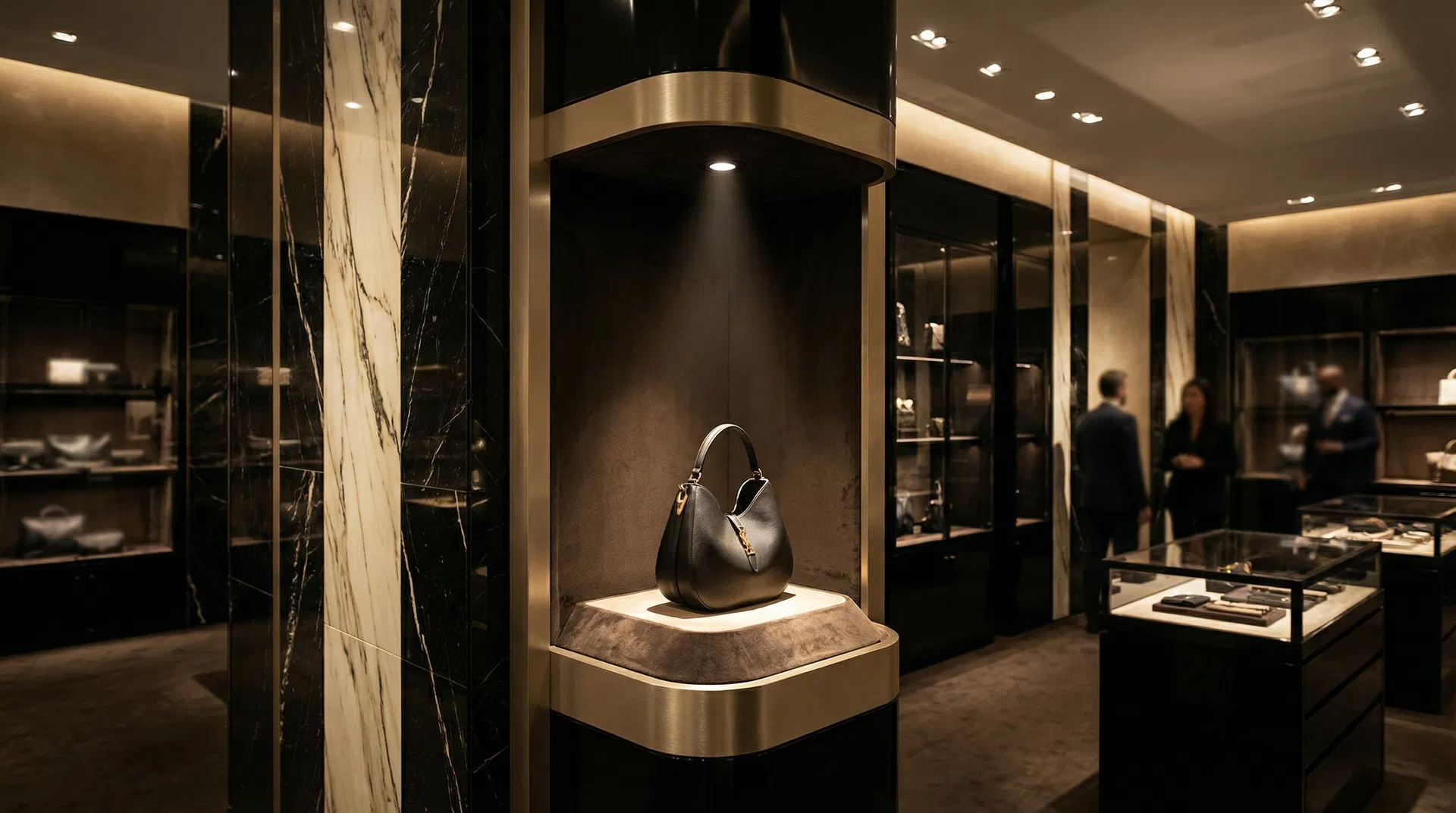
The traditional luxury retail model was built on a specific set of consumer motivations: status signalling, access to superior craftsmanship, the social currency of brand recognition, and the aspirational projection of a lifestyle associated with wealth and taste. The physical store was the theatre in which these motivations were staged, the marble floors, the trained salespeople, the carefully rationed product display, the deliberate friction of the high-threshold entrance.
This model worked because it operated within a relatively stable hierarchy of cultural authority. The luxury brand knew more than the consumer. It defined what was desirable, what was rare, and what was worth the price premium. The consumer's role was to aspire, to acquire, and to display.
That hierarchy has not collapsed, but it has been significantly complicated. The contemporary luxury consumer is, on average, younger, more globally mobile, more digitally native, and more culturally informed than any previous generation of luxury buyers. They have access to independent sources of aesthetic authority that do not require the endorsement of a heritage house. They are as likely to value a rare vintage find or an emerging designer as a recognisable monogram. And they are acutely sensitive to the difference between genuine distinction and the performance of it.
In this context, the luxury retail experience must work harder to justify itself. The store that relies on brand heritage, architectural grandeur, and trained deference to do the experiential heavy lifting is increasingly finding that these elements are necessary but no longer sufficient. Something more is required.
What the Most Sophisticated Luxury Retailers Are Getting Right
The luxury retailers that are navigating this moment most successfully share a set of orientations that distinguish them from those still operating on the legacy model. Here, examined honestly, is what they are doing well.
✓ GETTING RIGHT Radical Personalisation That Goes Beyond the Name on the Box
The most advanced luxury retailers have understood that personalisation in the experiential age means something categorically different from monogramming. It means that the store experience adapts to the individual, their preferences, their history with the brand, the cultural references they carry, the kind of encounter that will feel meaningful to them specifically. This requires investment in client relationship data, in staff training that goes well beyond product knowledge, and in the flexibility to create genuinely bespoke moments within a coherent brand framework. The client who walks into a store and is offered an experience that feels designed for them, not for a demographic, but for them, is experiencing luxury as it was always meant to feel.
✓ GETTING RIGHT Using Temporary Formats to Reach New Audiences Without Diluting the Core
Several of the most astute luxury houses have understood that the pop-up store solves a structural problem that the flagship cannot: how to reach a new consumer segment, younger, more diverse, geographically dispersed, without bringing that segment into contact with the existing client base in ways that might create brand friction. A carefully placed, impeccably designed pop-up activation can introduce the brand to a new audience in a context that feels native to them, generate significant cultural conversation, and create a pathway to eventual permanent client relationships, all without compromising the exclusivity of the core brand experience. This is the guerrilla logic applied to luxury positioning, and it works.
Field observation: In my work with fashion and luxury brands across the Middle East and Europe, I have observed that the brands using temporary formats most intelligently are those whose marketing and retail strategy functions are most tightly integrated. The pop-up is not briefed as a marketing event, it is briefed as a retail and relationship-building strategy with a marketing dimension.
✓ GETTING RIGHT Designing Stores as Cultural Institutions, Not Just Points of Sale
The luxury flagships that generate the most sustained cultural conversation are those that have accepted a role beyond commerce: as curators, patrons, and hosts. Stores that present art, that invite cultural figures into the space, that create programming around ideas rather than just products, these are stores that give consumers a reason to visit that transcends the purchase decision. The commercial outcome is a store with a relationship to its neighbourhood and its cultural moment that no advertising campaign can manufacture. The visit becomes an experience worth having on its own terms, and a powerful accelerant of brand desire.
What Too Many Luxury Retailers Are Still Getting Wrong
Against these genuine achievements, the sector carries a set of persistent failures that the language of experience has, in some cases, made harder to see clearly.
✗ GETTING WRONG Confusing Architectural Investment with Experiential Design
The most common mistake in contemporary luxury retail is treating the store as a monument rather than an encounter. Spectacular architecture, premium materials, and dramatic spatial gestures create an environment that photographs beautifully, and that can leave visitors feeling awed but not engaged, impressed but not moved. Architecture is a necessary dimension of luxury retail design; it is not sufficient on its own. A store that is visually overwhelming but experientially passive, where the visitor looks rather than participates, admires rather than connects, is a store whose experiential ambition stops at the surface. The measure of a luxury retail experience is not whether visitors are impressed when they enter. It is whether they feel genuinely different when they leave.
✗ GETTING WRONG Staff Training That Produces Deference Rather Than Connection
The luxury retail encounter has historically been shaped by a specific staff archetype: impeccably presented, precisely scripted, subtly assessing. The trained luxury sales associate performed competence and exclusivity simultaneously, you felt, as a client, that you were being served by someone who knew more than you and who was granting you access to something you had earned. This dynamic made sense when the brand held all cultural authority. In the contemporary context, it can read as condescension. The luxury consumer who knows exactly what they want, who has researched the product more thoroughly than the sales associate, who brings their own aesthetic authority to the encounter, this consumer does not want deference. They want genuine expertise, authentic conversation, and the feeling that the person serving them is actually interested in them. Staff training that produces the former and not the latter is a significant experiential liability.
✗ GETTING WRONG Digitising the Surface Without Rethinking the Substance
The luxury sector's engagement with digital technology in-store has been, with notable exceptions, more superficial than strategic. Interactive screens, QR codes linking to brand films, digital fitting rooms, these are technology-as-decoration rather than technology-as-experience. The fundamental question that technology should answer in a luxury retail context is: how does this make the encounter between client and brand more personal, more meaningful, or more memorable? When the answer is 'it doesn't, but it demonstrates that we are innovative,' the technology is undermining rather than enhancing the experience. The luxury consumer is not impressed by technology for its own sake. They are moved by experiences that surprise, delight, and connect, whether or not technology plays a role.
✗ GETTING WRONG Applying Mass-Market Experience Logic to a Category That Requires Its Opposite
Perhaps the most revealing failure in contemporary luxury retail is the importation of experience economy frameworks developed for mass-market contexts. When luxury brands speak of 'touchpoints,' 'customer journeys,' and 'experiential retail,' they are often applying a logic borrowed from sectors, hospitality, entertainment, technology, where the goal is to maximise engagement across the largest possible audience. Luxury operates on the inverse principle: the value of the experience is partly constituted by its restriction. A luxury encounter that feels available to everyone has, by definition, ceased to be luxury. The frameworks that work for experiential retail in the mass market can actively damage luxury positioning when applied without understanding this fundamental asymmetry.
"Luxury retail's greatest risk in the age of experience is not that it fails to create experiences. It is that it creates the wrong kind , spectacular but impersonal, immersive but generic, impressive but unmemorable."
The Horizon: What Luxury Retail Must Become
The luxury retail stores that will define the category in the decade ahead will not be the ones with the most spectacular architecture or the most sophisticated technology. They will be the ones that have most clearly answered the question that the experiential age demands of every physical space: why does it matter that this encounter happens here, in person, rather than anywhere else?
For luxury, the answer to that question has always existed. The physical encounter with genuine craftsmanship. The relationship with a client adviser who knows you over time. The feeling of being in a space that was designed for the exceptional, not the average, not the aspirational, but the genuinely exceptional, and that communicates that to you through every sensory detail.
The luxury retailers getting it right are the ones who have remembered this, and are building physical experiences around it with the same rigour and creativity they bring to their product. The ones getting it wrong are those who have confused the language of transformation with the practice of it.
The distance between the two, in the current moment, is the most interesting gap in all of retail.
Which luxury retail experience has genuinely moved you recently, and what was it about the encounter that made it exceptional? I am always interested in examples where the physical store is doing something that nothing else could replicate.
FURTHER READING
Explore Ghalia Boustani's Books on Retail & Pop-Up Stores
Luxury retail, consumer experience, ephemeral formats, and the future of physical stores, explored in depth across four books published by Routledge.
Ephemeral Retailing: Pop-Up Stores in a Postmodern Consumption Era · 2019
Pop-Up Retail: The Evolution, Application and Future of Ephemeral Stores · 2021
A Fashion Retailer's Guide to Thriving in Turbulent Times · 2022
Understanding Pop-Up Stores through Passion and Practice · 2025
All published by Routledge. Browse and order at routledge.com/search?author=Ghalia%20Boustani
— WORK WITH GHALIA
Ready to transform your retail strategy?
Book a consultation to discuss your retail challenges and how Ghalia's expertise can help.
BOOK A CALL